
What are Corals?
If you have been diving or snorkeling before, or maybe in documentaries or some online videos you may have seen some corals. Many people think that corals are plants, but they are in fact animals.
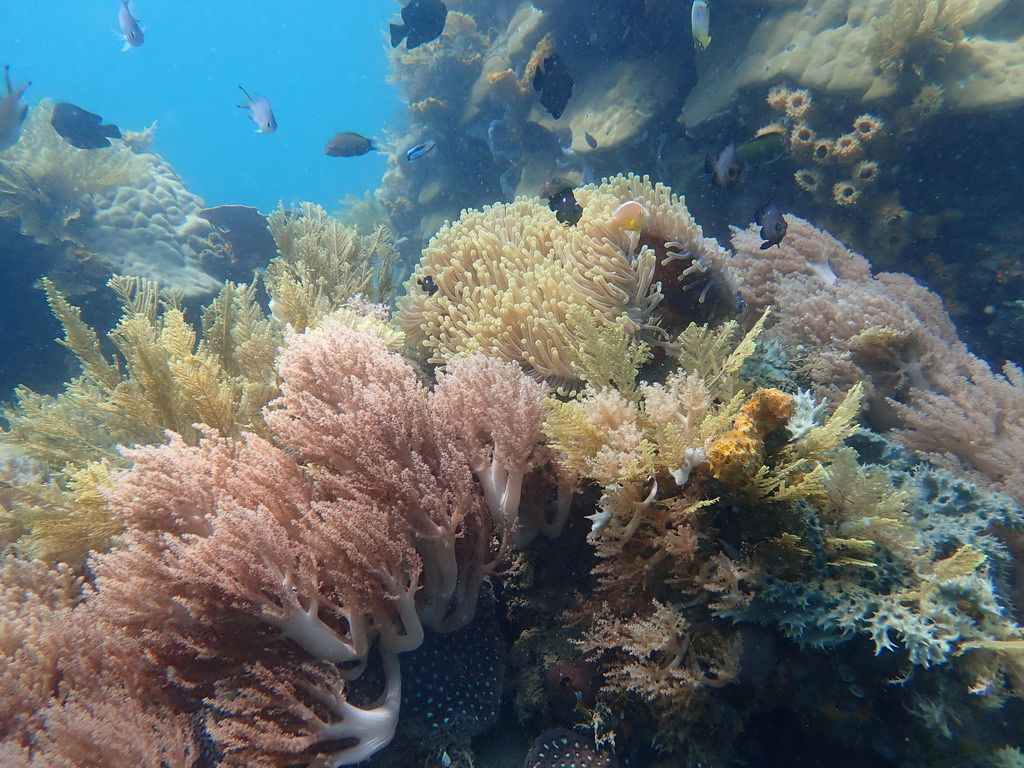
Corals are colonies of tiny animals called polyps (closely related to jellyfish and anemones).
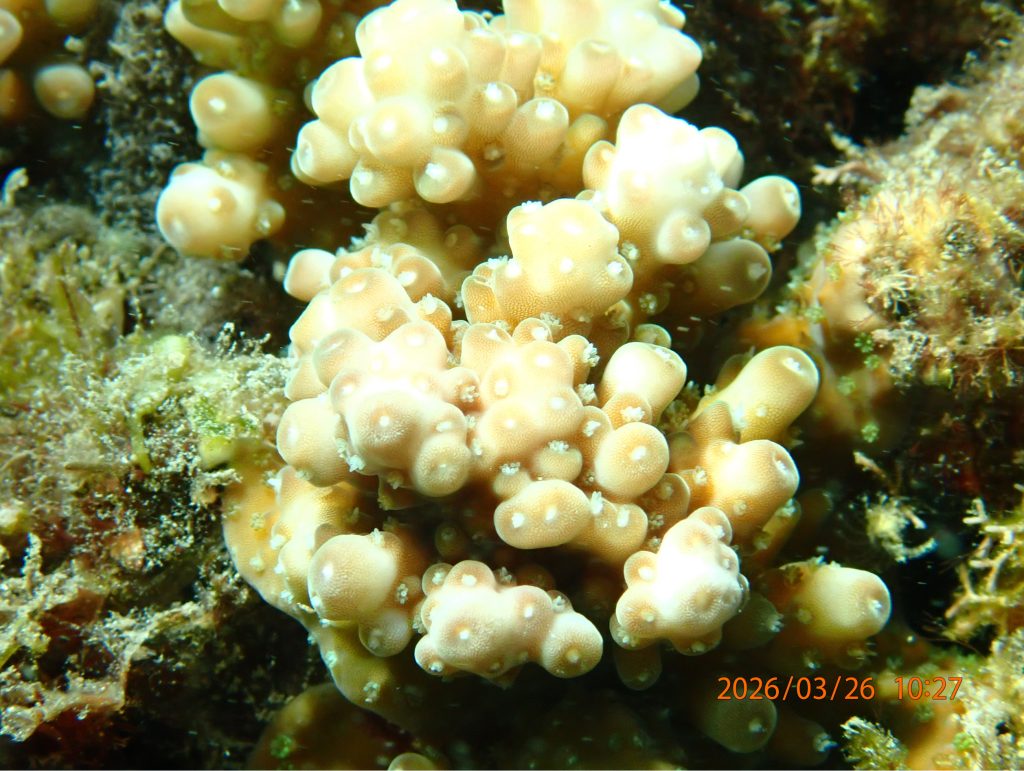
There are two main types of corals: hard corals and soft corals. Hard corals produce rigid calcium carbonate skeletons that, over time, build the coral reefs we know today.
Soft corals do not form these hard skeletons and are often more flexible
Most polyps bodies are transparent and their vibrant colours come from microscopic algae called zooxanthellae -( zoo-zan-thel-ay) that live in their tissues.
The polyps and zooxanthellae mutually benefit from each other through a relationship called symbiosis

The coral provides the algae with a protected home, along with nutrients such as carbon dioxide and nitrogen compounds. In return, the zooxanthellae use sunlight to photosynthesise, producing oxygen and energy-rich sugars that provide the coral with most of the energy it needs to grow and survive.
Coral polyps use this energy, along with calcium and carbonate ions from seawater to build hard calcium carbonate skeletons.
As generations of polyps grow, live, and die, these skeletons accumulate over hundreds to thousands of years, forming the spectacular coral reefs that support some of the richest ecosystems on Earth.
While both hard and soft corals are important for healthy reef ecosystems, it is the hard corals that create the reef’s limestone foundation, making them a primary focus of many coral restoration efforts.
Why restore reefs?
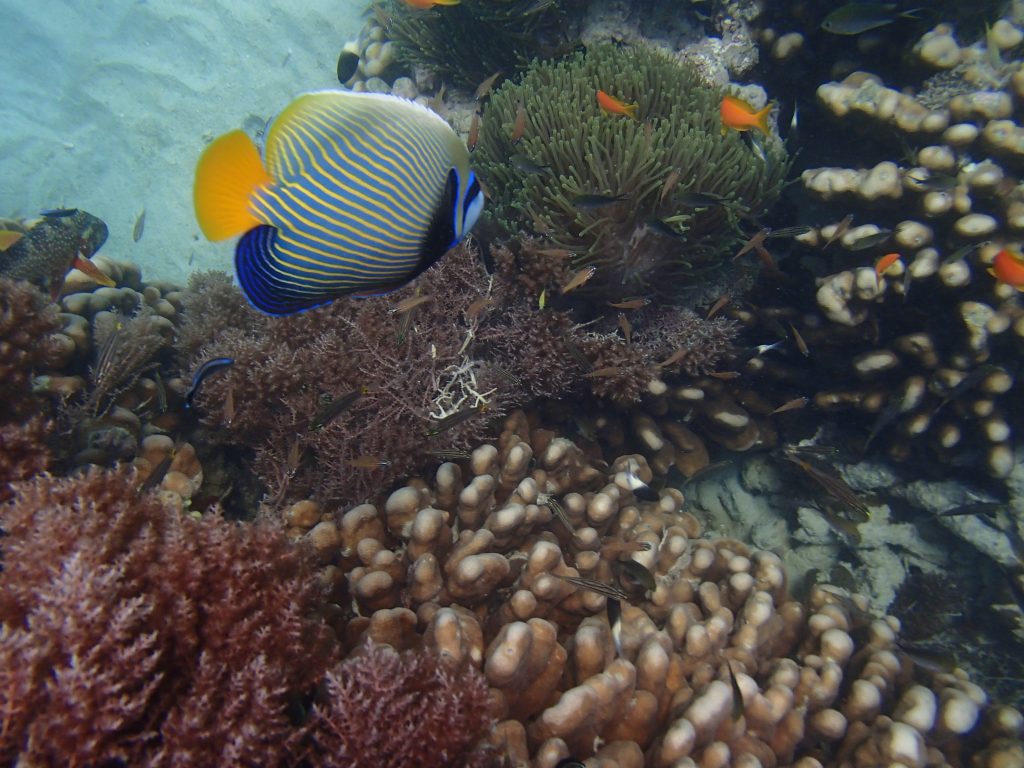
Coral reefs are among the most diverse and valuable ecosystems on Earth. They cover less than 1% of the world’s ocean floors. They provide feeding grounds, breeding grounds, nursery habitats and shelter for an incredible array of marine life -from tiny nudibranchs, shrimp and gobies, to larger iconic species such as rays, octopus, sharks and dolphins.
We humans also rely on reefs for our livelihoods, as a source of food,tourism and coastal protection. Coral reefs act as natural barriers, absorbing wave energy and helping to protect shorelines from storms, flooding and erosion. They also provide opportunities for recreation, education and connecting with the natural world.
Despite their importance, coral reefs are under increasing threat. Pollution, overfishing, coastal development, and physical damage from activities such as anchoring boats or accidentally kicking and standing on corals all place pressure on these fragile ecosystems. On top of this, climate change is causing ocean temperatures to rise, leading to increasingly frequent and severe coral bleaching events.
Coral bleaching happens when coral is under prolonged stress, usually from warmer sea temperatures. In response to this stress, they expel the zooxanthellae from their tissues. Without these algae, the corals lose their colour and become weakened. If stressful conditions continue for too long, the corals can eventually die.
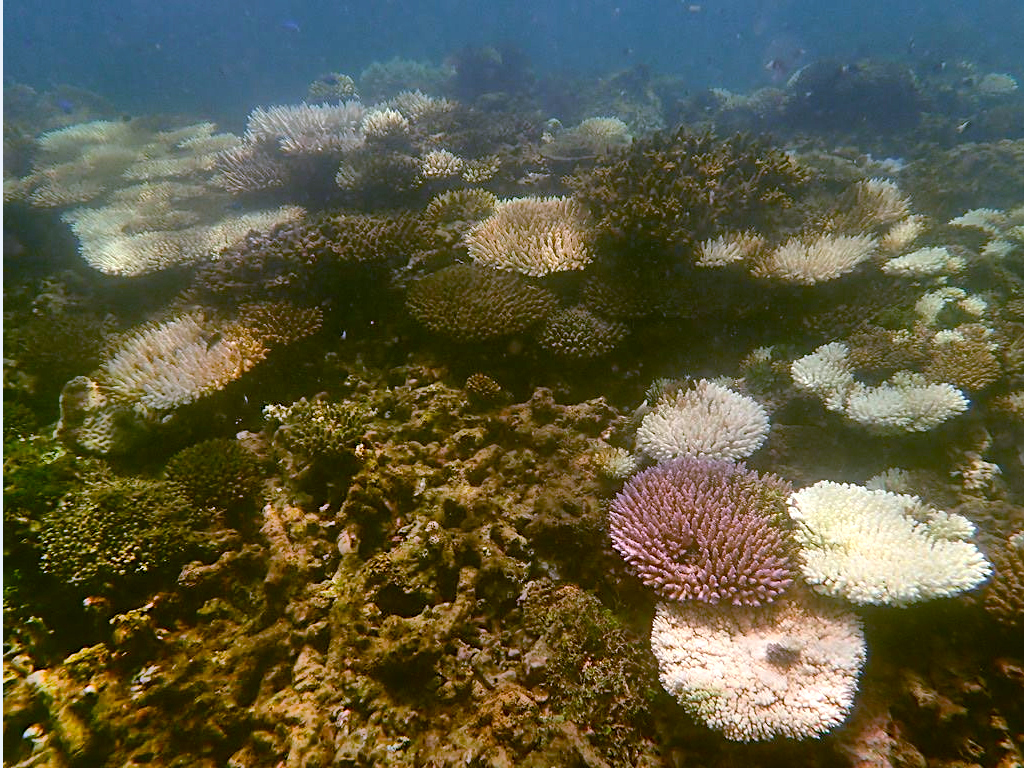
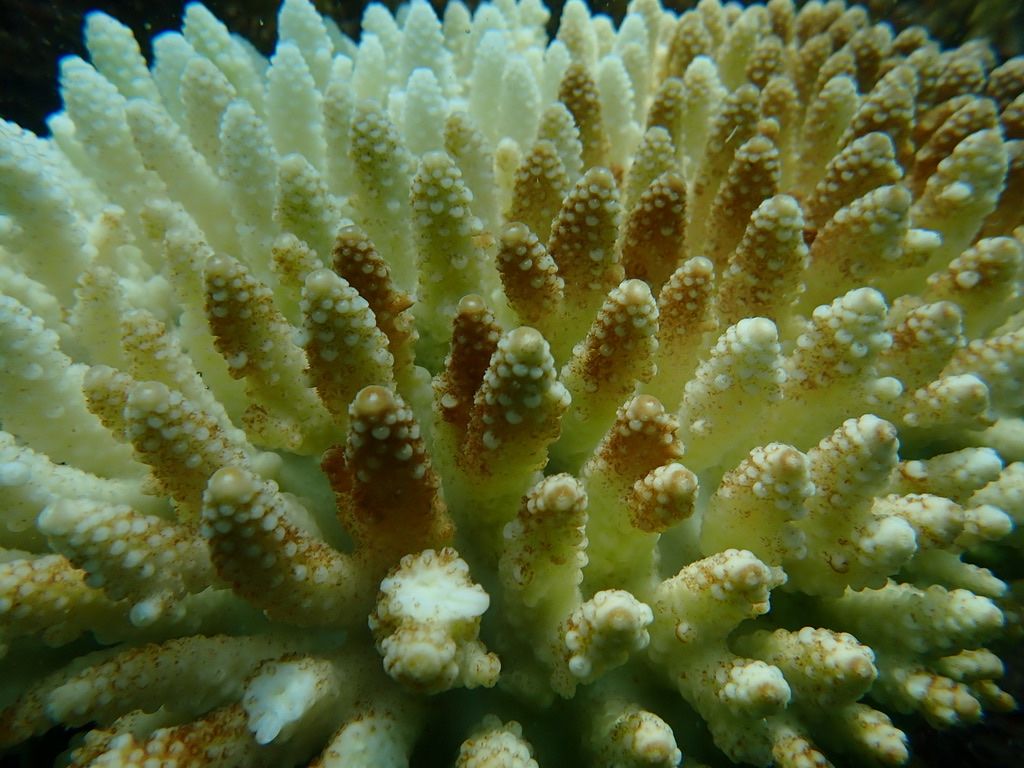
Restoring hope
Coral reef restoration helps damaged reefs to recover by re-establishing living corals in areas where they have been lost or severely degraded. While restoration cannot replace the need to address climate change and other threats, it can accelerate reef recovery, improve biodiversity and increase the resilience of these ecosystems, allowing them a better chance to survive and thrive for future generations.
Scientists employ different tools, methods and technologies to aid restorations throughout the world. Many restoration projects typically involve:
- Collecting naturally broken coral fragments or taking small donor fragments
- Growing the fragments in underwater coral nurseries
- Monitoring the growth and health of the fragments
- Transplanting mature corals onto damaged reefs (attachment methods can be with epoxy, cement or nails /springs this depends on the location and species of coral)
- Long term monitoring to measure survival and ecosystem recovery
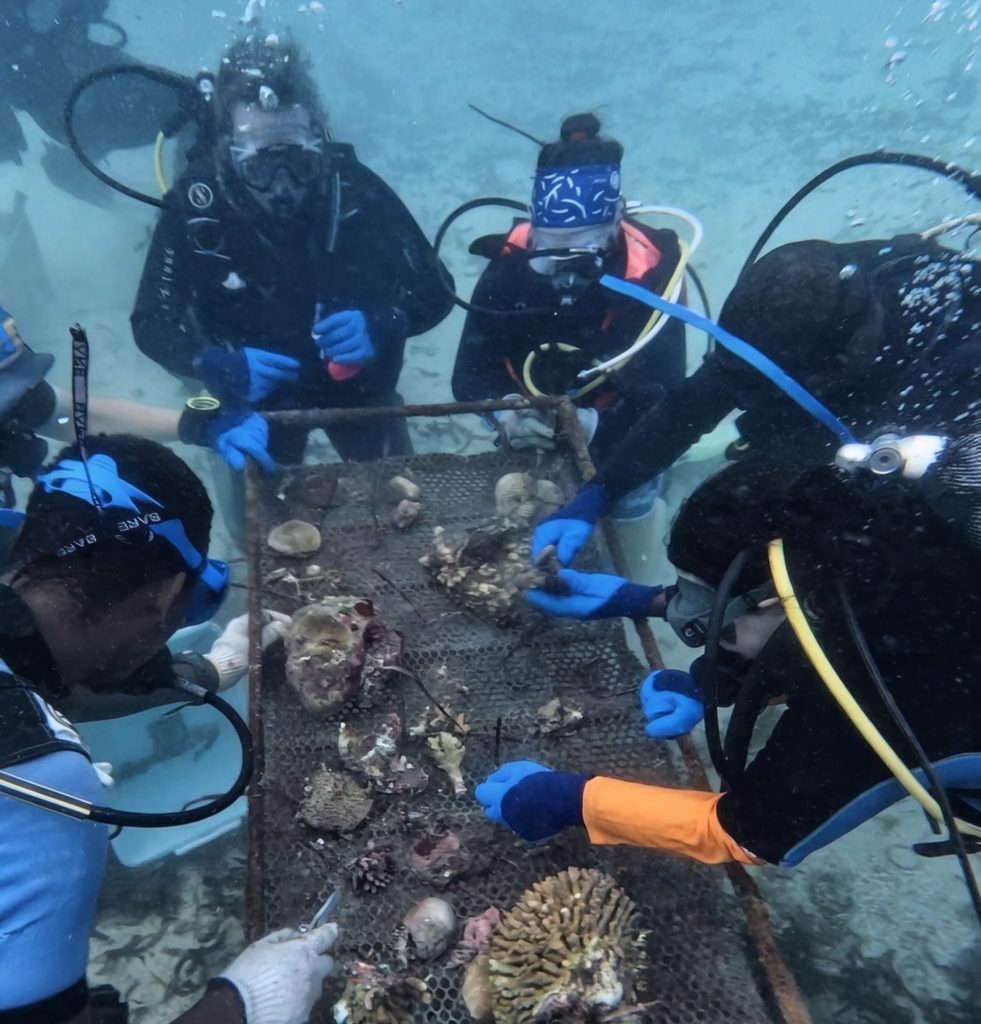
Photo by Lucky Kahindi
(https://www.instagram.com/lucky.underwater/)
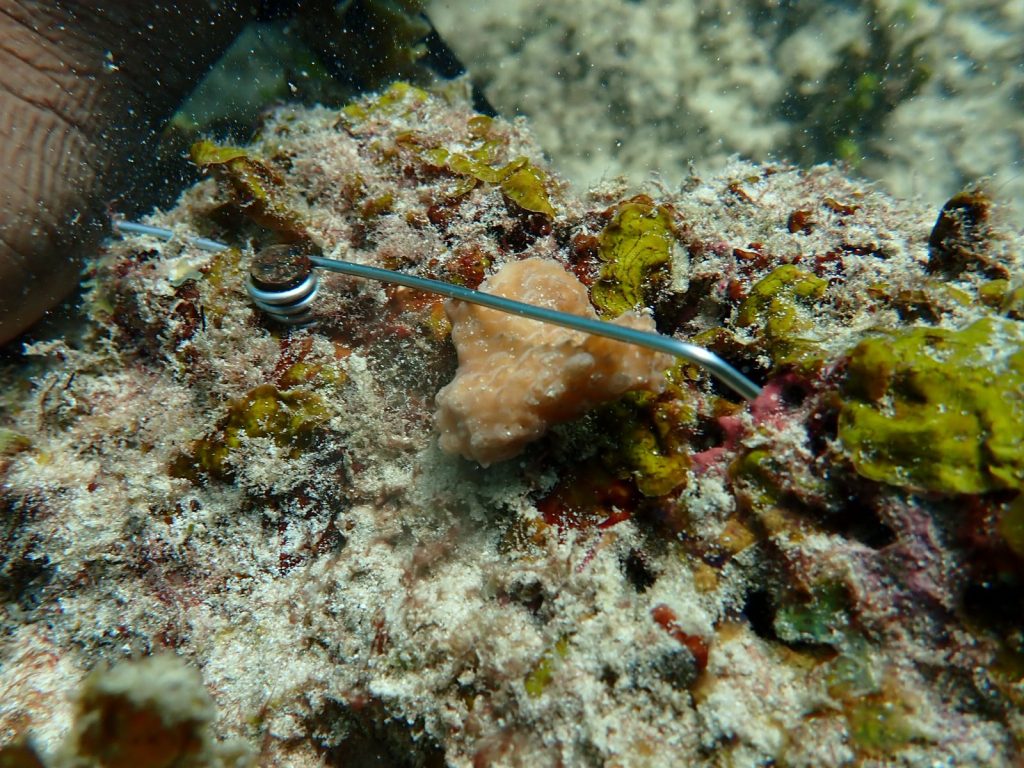
Photo by Lucky Kahindi
(https://www.instagram.com/lucky.underwater/)
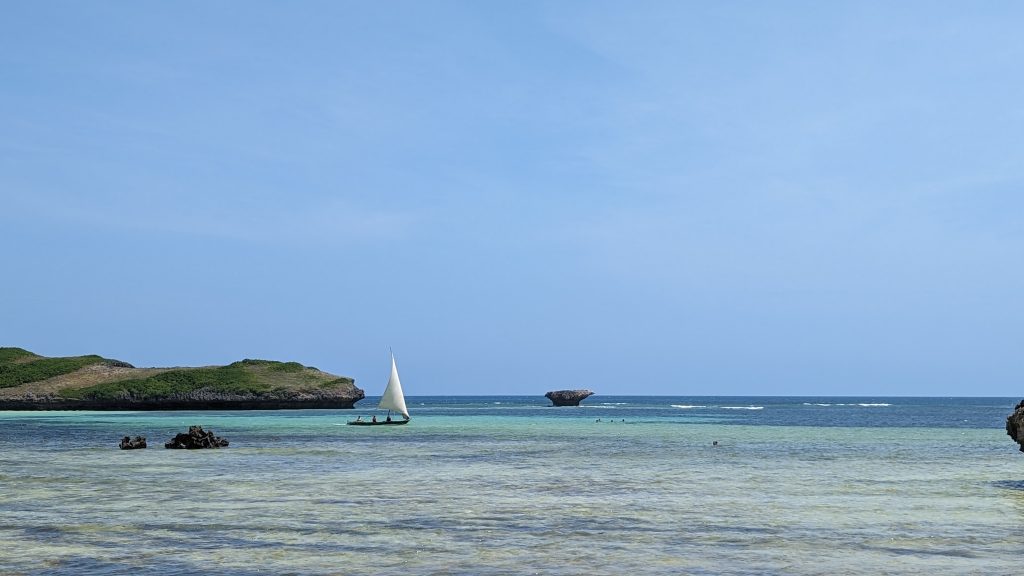
In Watamu, Kenya, a dedicated team of marine scientists from A Rocha Kenya has been working to restore damaged coral reefs since 2024. Their restoration programme combines scientific research, hands-on conservation, and community engagement to help rebuild resilient reef ecosystems
Working in partnership with the Kenya Wildlife Service, Turtle Dive Watersports Center, local schools, and community groups, the team is restoring reefs while also building local knowledge and long-term stewardship. This collaborative approach recognizes that successful conservation depends not only on restoring corals, but also on supporting the people who live alongside and depend on these ecosystems.
The team maintains coral nurseries where healthy coral fragments are grown before being transplanted onto degraded reefs. They regularly monitor the health and survival of these corals, collect data to measure the success of restoration efforts, and adapt their methods based on scientific evidence. Alongside this work, they engage with local schools and communities through environmental education, helping inspire the next generation of ocean stewards and raising awareness of the importance of healthy coral reefs.
How you can help!
Healthy coral reefs don’t recover overnight. Restoration is a long-term effort that depends on scientists, conservation organizations, local communities, and teams working together. By joining our coral restoration dive expedition, you’ll have the opportunity to contribute directly to this work while learning from experienced marine conservation professionals. Whether you’re helping maintain coral nurseries, or plant corals, or monitor reef health, your participation supports ongoing restoration efforts and helps protect these incredible ecosystems for future generations.
How expedition participants contribute.
You will work alongside the marine scientists in the beautiful waters of Watamu to learn and participate in :
- Reef ecology
- Coral identification
- Searching for Corals of Opportunity (naturally broken fragments)
- Planting coral fragments
- Weeding macroalgae
- Cleaning nursery tables
Other ways you can help:
- Reduce your carbon footprint.
- Choose sustainable seafood.
- Avoid reef-damaging sunscreens where appropriate and follow local guidance.
- Never touch or stand on corals
- Take the Green Fins course to learn about ways you can reduce your impact while diving or snorkeling
- Snorkel or dive with responsible tour operators
- Support marine conservation organisations.
- Share what you’ve learned with others.
- Join a restoration trip or donate to a restoration project.
Ready to see this work firsthand? Join our November expedition in Watamu →